



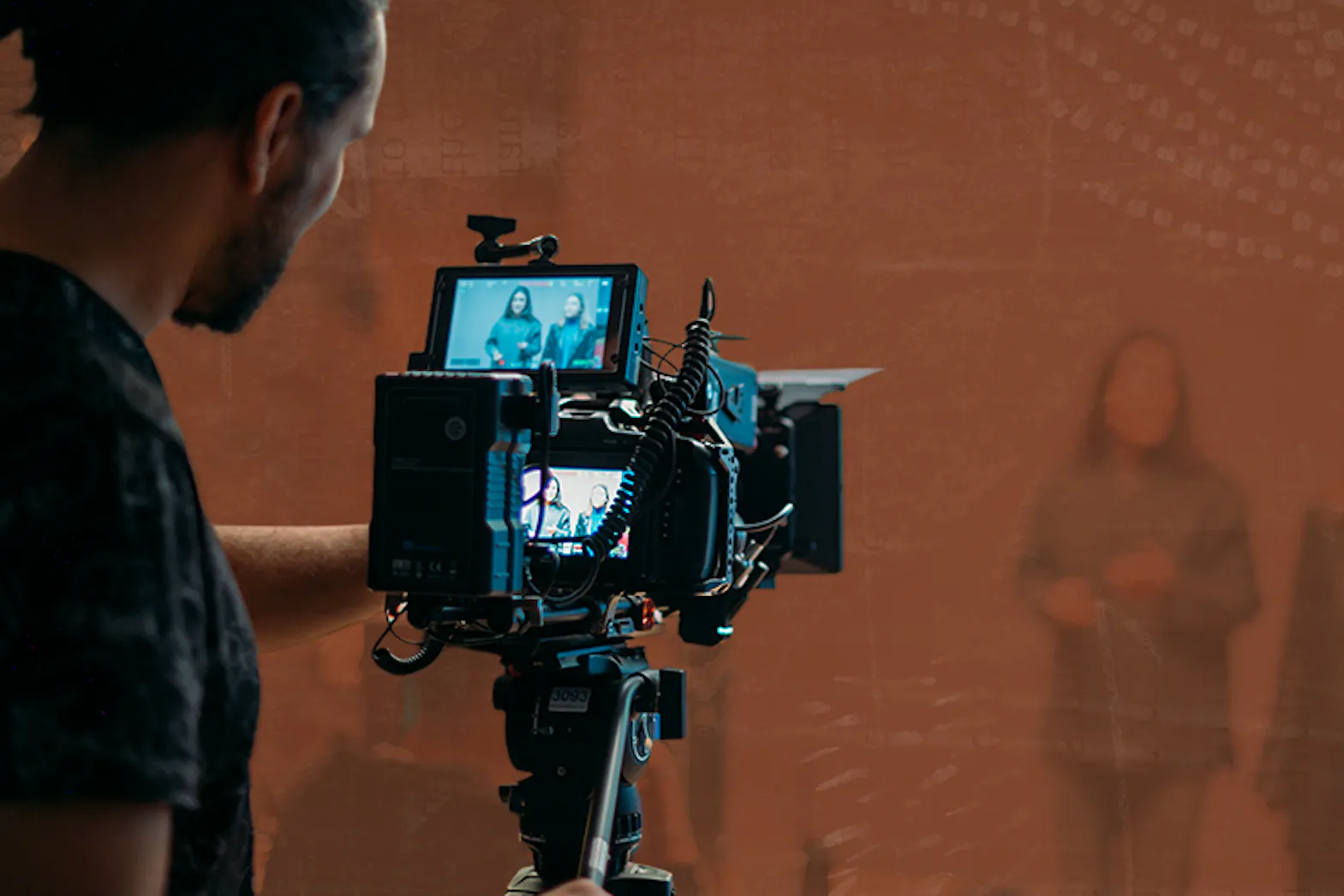
Why Is Language in the Photography & Videography Space So Aggressive?
For decades, the language used in commercial film and photography production has been heavily borrowed from military, hunting, and traditionally aggressive, masculine spaces. But as the creative industry evolves to prioritize psychological safety, inclusivity, and mental well-being, our vocabulary needs to evolve with it.
The Masculine & Aggressive History of Terms in Media
Why is creative language so aggressive? Historically, early filmmaking and photography industries were heavily dominated by men, often repurposing mechanical, industrial, or military terms. Think about the phrase "headshot” or even referring to someone as a “target” or “subject." When we use violent or dominating language in creative culture, it works to subtly shift the power dynamic.
The creator becomes the "hunter," and the subject becomes the "prey" or the "target." For individuals who have experienced trauma, or simply for people who thrive in collaborative rather than combative environments, this language can trigger a subtle, subconscious defence mechanism, tightening up their energy right when you need them to be vulnerable. By shifting the way we communicate in these fields away from more forceful, extractive, and generally violent terms, we move away from a culture of dominance and toward a culture of connection, ultimately creating more impactful art and safer workspaces for everyone.
Ways to Shift Your Vocabulary
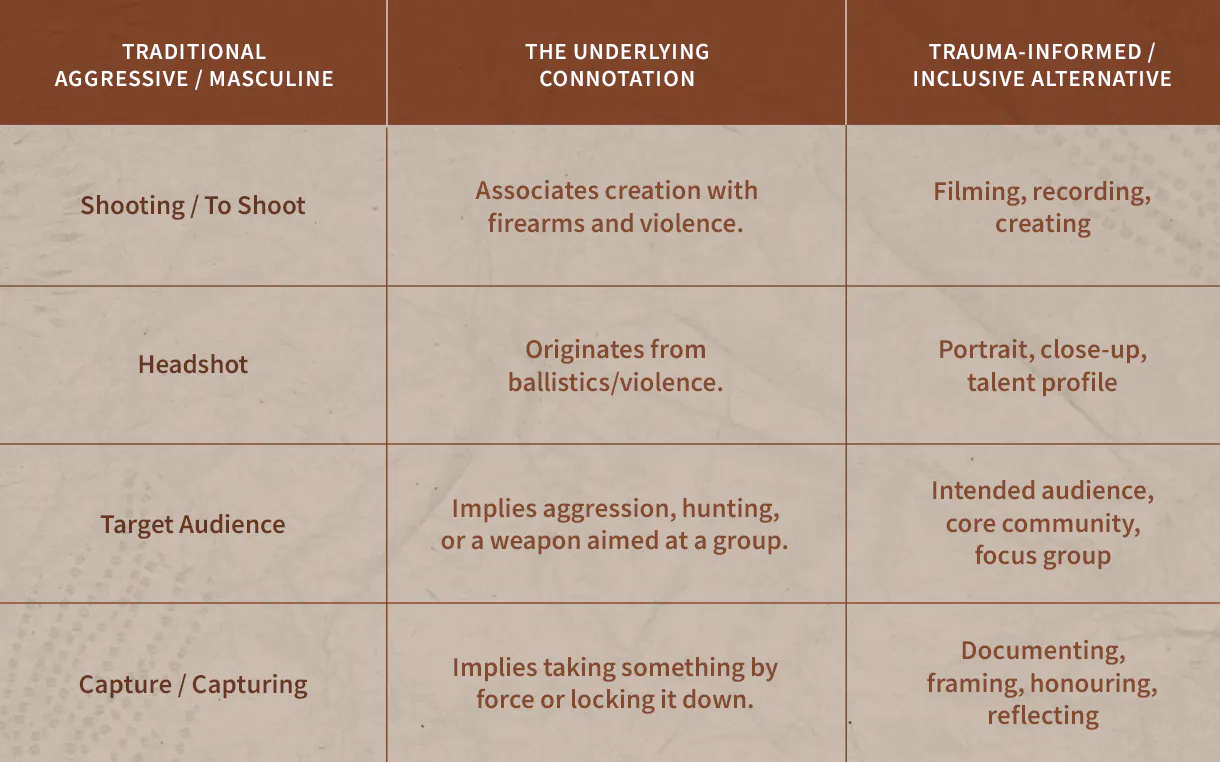
Row 1: Traditional: "Shooting / To Shoot" | Connotation: "Associates creation with firearms and violence." | Alternative: "Filming, recording, creating" Row 2: Traditional: "Headshot" | Connotation: "Originates from ballistics/violence." | Alternative: "Portrait, close-up, talent profile" Row 3: Traditional: "Target Audience" | Connotation: "Implies aggression, hunting, or a weapon aimed at a group." | Alternative: "Intended audience, core community, focus group" Row 4: Traditional: "Capture / Capturing" | Connotation: "Implies taking something by force or locking it down." | Alternative: "Documenting, framing, honouring, reflecting"
Why This Matters for Creatives and Their Teams
Shifting your vocabulary is fundamentally about creative efficacy and psychological safety; it isn't just policing the words that we use in our day-to-day lives.
- 1
Better Performances: When a director tells an actor, "I’m going to shoot you at this angle," vs. "I want to capture your reflection in this light," it changes the nervous system's response. The talent relaxes, leading to more genuine emotion.
- 2
Brand Alignment: Modern brands want to be seen as empathetic, human, and progressive. If your internal production language is aggressive, it’s bound to blend into your brand culture.
- 3
Inclusivity: Softening the traditionally masculine, dominant language opens the door for a wider diversity of creators to feel at home behind and in front of the lens.
Language is one of the core building blocks of art and culture.
If we want to cultivate a space for storytelling and creativity, we need to stop talking like we are diving headfirst into combat. Next time you’re working on a project, or in a meeting with clients, challenge yourself to swap out even just two violence-driven metaphors for collaborative ones. My current favourite is, rather than saying “killing two birds with one stone,” saying, “feeding two birds with one scone.” I have had countless friends and colleagues mention how they enjoy that so much more. Just watch how the energy in the room shifts from a subtle change in language. After all, as creatives, we are in the business of framing authentic, human connections, and our words should reflect the very humanity we are trying to create.