



In my last journal entry, I framed climate resilience as an urgent necessity, but I also recognized our global economic and geopolitical structures as one of the major barriers we are encountering in achieving it. In this piece, I decode the major flaws within our current petro-fueled economy and examine the realities, risks, and truths of building a reimagined world order around the fossil fuel transition.
Why Has It Been So Hard to Stop Using Fossil Fuels?
For most of human history, gold was used as a currency and as a tangible storage of wealth. Nations stored this precious material in vaults to back up the value of their currencies and prove their financial strength when leveraging debt and strengthening trade. After World War II, the United States accumulated almost two-thirds of the global gold reserves, which made their dollar a currency backed by metal. In short, countries would hold the American dollar in their vaults, which was legally viewed as gold, as it could be exchanged at any time for the real ore. However, unlike the physical material, the United States currency could be printed at will and exported to increase world trade. With time, the amount of currency created significantly outnumbered the actual gold reserves of the United States.
In the 1970s, the world changed when the United States discontinued the dollar’s backing from gold, which led it to lose significant value as it was now a mere fiat currency. Following this, to keep their currency strong and in demand, the country made a historic deal with major oil producers like Saudi Arabia. Under this agreement, oil would be priced and sold exclusively in the American dollar, which created the petrodollar system.
Practically, fossil fuels replaced gold as the real anchor of the global economy. Unlike ancient times, nations now do not hoard it to stay powerful; instead, they continue to use the American dollar reserves to buy oil and gas to run their industries, which in return strengthened the currency. Even today, 80% of the global oil trade happens in the United States currency. Because fossil fuel reserves sit directly on the balance sheets of banks and national governments, they account for trillions of dollars in economic value and national Gross Domestic Product (GDP). This means catastrophic outcomes for traditional economies if there is a swift shift to renewables and alternative energy. To protect these trillions in asset value, major fossil fuel corporations beginning in the late 20th century actively suppressed their own climate research and funded campaigns to obscure the science. Politicians and people in power often resist transitioning to clean energy and typically downplay climate change because doing so directly threatens the financial foundation of their wealth and authority.
Energy transitions disrupt the global balance of control. Historically, when resisting the shift, those in power have turned to military aggression to protect their wealth while emerging authorities fight to secure new resources. Moving away from fossil fuels today carries a similar risk of global instability as nations scramble for control over new energy markets and critical materials used in the production of batteries.
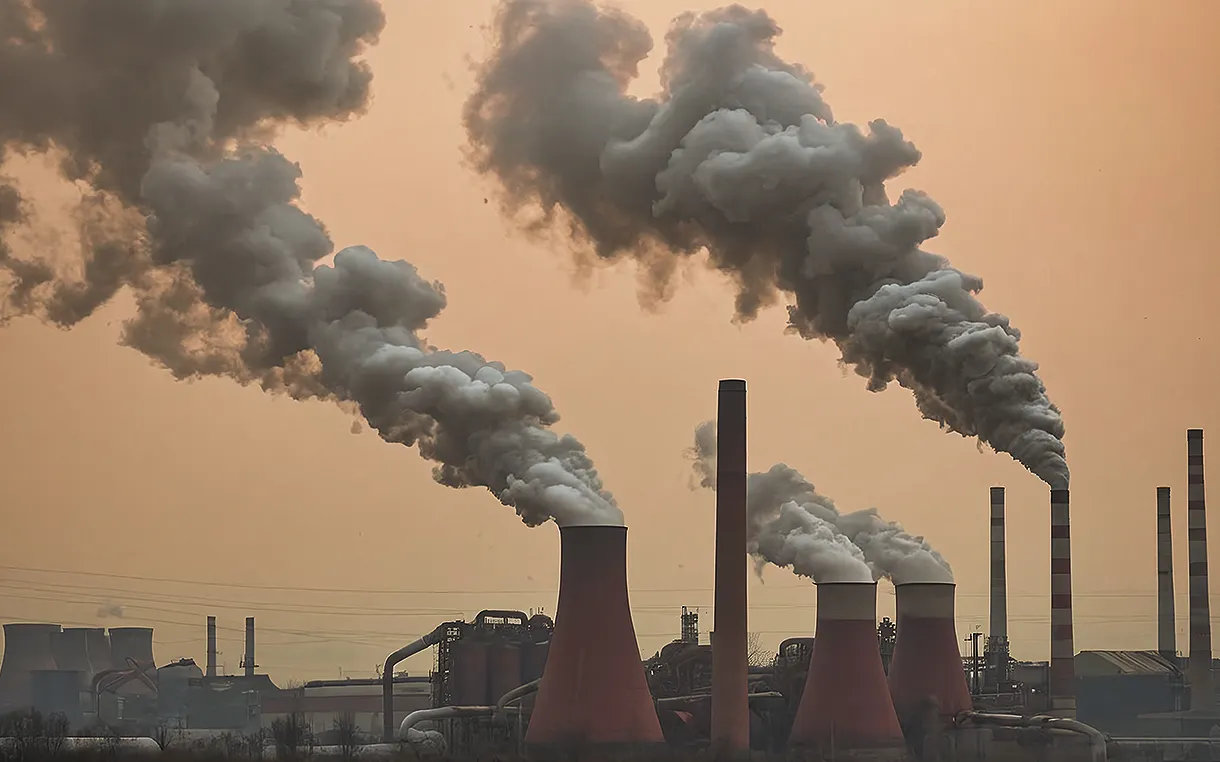
Reimagining the Global Economy and Geopolitics
To truly tackle climate change, we need to reimagine how global geopolitics and the economy function.
In a post-fossil-fuel world, geopolitical leverage will shift away from traditional petro-states that control oil fields. Instead, influence will move toward nations rich in critical minerals (like lithium, cobalt, and rare earth elements) and those that lead in renewable energy technologies, like solar and battery manufacturing. More importantly, a real climate solution means rethinking how our economy grows. Today's global economy is built on infinite growth, relentless consumption, and constant productivity gains.
The conventional idea is that growth or development cannot occur while reducing greenhouse gas emissions. However, the United Kingdom has proved otherwise. Their economy grew substantially over the first two decades of the 21st century while their carbon emissions were reduced by roughly 40% to 50%. There are many more examples of countries that are growing their economies while adapting to sustainable ways of living.
What are these countries doing right? These nations are succeeding by transforming the mechanics of their economies rather than shrinking them. They have achieved the decoupling of economic growth from carbon emissions by replacing harmful fossil fuels with renewables: setting legally binding carbon-reduction targets that attract private green investments while implementing market incentives like carbon pricing.
Crucially, they have turned the climate transition into an industrial strategy, proving that clean energy, energy efficiency, and green technology can drive modern job creation and economic competitiveness rather than hinder it. Reimagining our world would mean accepting a shift toward sustainable living, localizing supply chains, and smart localized economies. Instead of relying on massive world trade networks powered by cheap, damaging shipping fuel, nations will have to rely more on regional self-sufficiency.
There is, however, an important caveat to this emissions reduction success: a significant portion of the decrease claimed by developed nations has simply been offshored. By shifting heavy manufacturing and energy-intensive production to developing countries, the Global West has effectively exported its carbon footprint while continuing to consume the imported goods. True decarbonization cannot be achieved by merely shifting emissions across borders. To genuinely achieve the goal of reduced harmful output, wealthier nations must support and invest in the clean transition of the manufacturing hubs that supply these essential goods. Ultimately, climate resilience is an inherently global challenge which cannot be solved by a handful of nations acting in isolation while the rest of the supply chain remains powered by fossil fuels.
Reimagining our world thus requires cultivating greater regional self-sufficiency while fostering equitable global partnerships, moving away from hyper-globalized trade networks powered by cheap, polluting bunker fuel.
Are We Ready for This?
A true shift away from fossil fuels will be uncomfortable, especially for the Global West. For decades, Western countries have enjoyed an exceptionally high standard of living, such as low-cost consumer goods and rapid travel. Much of this convenience was directly subsidized by the petrodollar system and cheap, high-density energy. While the system was anchored by the American dollar, its benefits extended across the entire Western alliance as oil-exporting nations reinvested their trillions of petrodollars into Western banks and financial markets, flooding the Global West with cheap capital, low interest rates, and artificially high global purchasing power.
When mainstream commentators warn of a potential "economic collapse" during a green transition, what they often really mean is the end of this fossil-fueled growth model. In a localized, renewable economy, things may become more expensive, international travel may decrease, and overall hyper-convenience may decline. Global power dynamics will flatten, and the West may lose the passive economic advantages it held under the petrodollar regime.
Yet, a reduction in material throughput does not mean a decline in human well-being. Moving past fossil fuels demands that we uncouple our definition of progress from infinite consumption, trading hyper-convenience for regional resilience, public health, and ecological stability. This shift is necessary for the planet's survival, but it requires a fundamental shift in how we live every day as part of a sustainable economic transition.
So, the question remains: Are we truly ready for this change?