




The Anchor and the Chain
There is a strange, uneasy comfort in the calm before the storm. The moment when the tension that has been silently building has simmered so close to the edge of what we can handle and maintain. That the tightness in your chest starts to feel like a second skin, we do not just carry the pressure; we begin to live with it. We learn to work around the lump in our throat that we cannot truly ignore, but we pretend we do, treating it like a piece of unwanted, permanent furniture in a room we do not want to stay in.
We accept the weight not because we want it, but because we recognize it. And despite all the breathing exercises, meditation books, and relaxing videos we consume in hopes of quelling this pressure and feeling, it is not something that can be whisked away when we are told that it is “normal”.
This is the Anchor.
It manifests in the quiet and the loudness of your mind. During the broken sleep, the uneasy stomach, and the tightness forming in your chest. It can be there for weeks before you feel the real stress. Before you realize what is causing this feeling.
We look back at the day, the week, the month, or even the year, and see a minefield of "Maybes" and “What if’s”: Maybe there was a typo in that email? What if I seemed passive-aggressive in that response? Did I wear the right thing? Maybe I will not get the job? What if I am not what they are looking for?
It drives us to obsess and build off these thoughts because the "Maybes” and “What if’s” we conjure tie us to a sense of reality. They give us something to grasp; a tense sense of reassurance that we do not truly want, but do not feel safe parting with. It is something, and that “something” is more reassuring than the silence of the unknown.
This weight keeps us anchored to the moment, reliving every aspect of it to try to understand how we could have acted differently, or if our fears and thoughts are true. It stops us from moving forward. Pausing us in time and place, within the same looping cycle of self-doubt and anxiousness.
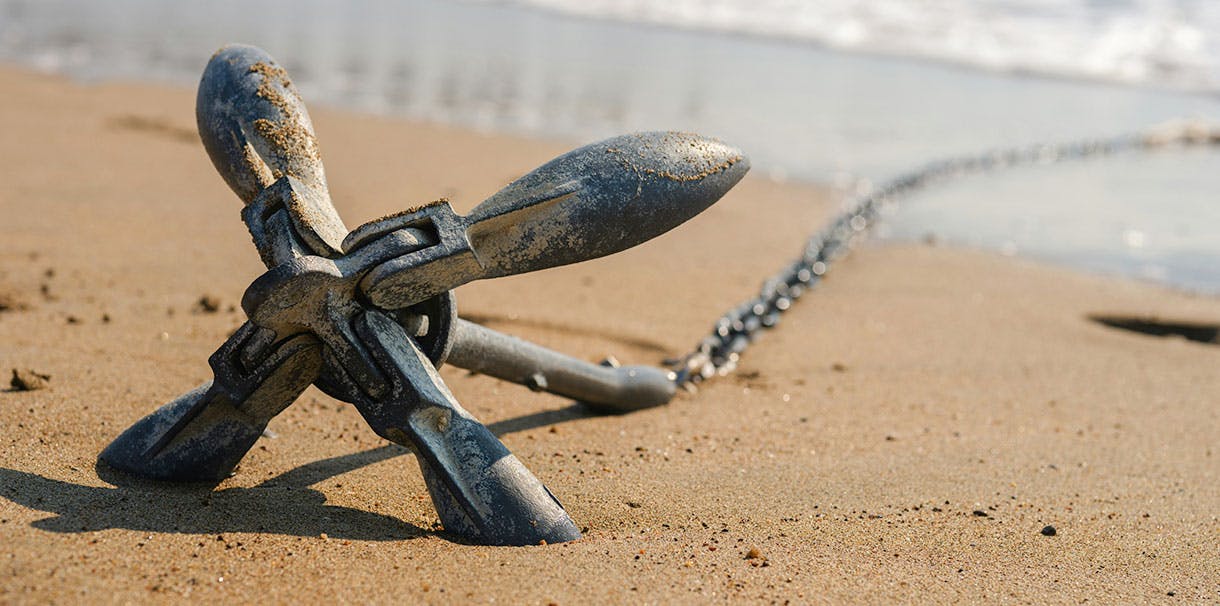
And while our focus is on the anchor, the obvious piece that keeps us stuck, it is the Chain that truly keeps us attached.
An anchor without a chain has no meaning; it is simply left behind and eventually forgotten. But the chain never allows the anchor to leave. It drags behind us, and because of this connection, we remain stuck with the same thoughts, feelings, and emotions.
How can we move past our anchor and chain? Are we expected to live with it, to adapt to it, to ignore it in hopes that it goes away?
Through a trauma-informed lens, we realize all chains and anchors are different. And while the concept of anchors and chains can be seen as the embodiment of tainted moments, it is not always. Is it not the reason we have memories? The reason we feel connected to a certain item, location, building, or food? These, too, are anchors and chains, just ones we do not negatively see. Ones that do not weigh us down like the others do.
Though some of the anchors might be covered in rust, you must spend time with them. You must take a closer look to see the metal beneath that can shine. To see the actual day and the feelings hidden beneath the anxiety. You might still remember how nervous you were about a meeting last week, but if you look past the fear of not knowing how you looked in the eyes of others, you can remember and see that day in a new light. How the sun shone, or the rain poured, or a positive conversation you had before the day was marked as “ruined”. There is always a beauty, a meaning, a bigger picture hidden beneath the rust.
We can not ignore the chain and anchor. But maybe they should not be ignored. Maybe it is a piece of us we should, in a way, appreciate for how it ties us to the fact that we are here, living and breathing. When you look at your past anchors, the time you did not know if this was the career for you, and compare them to your recent anchor, where you are hoping for a promotion in the same field you now love, the growth becomes clear. It reminds us of our strength and the many ‘unknowns' we have already survived. And maybe just knowing that will help remind you that this moment, too, could be another ‘unknown’ in a sea of strengthening weights.