



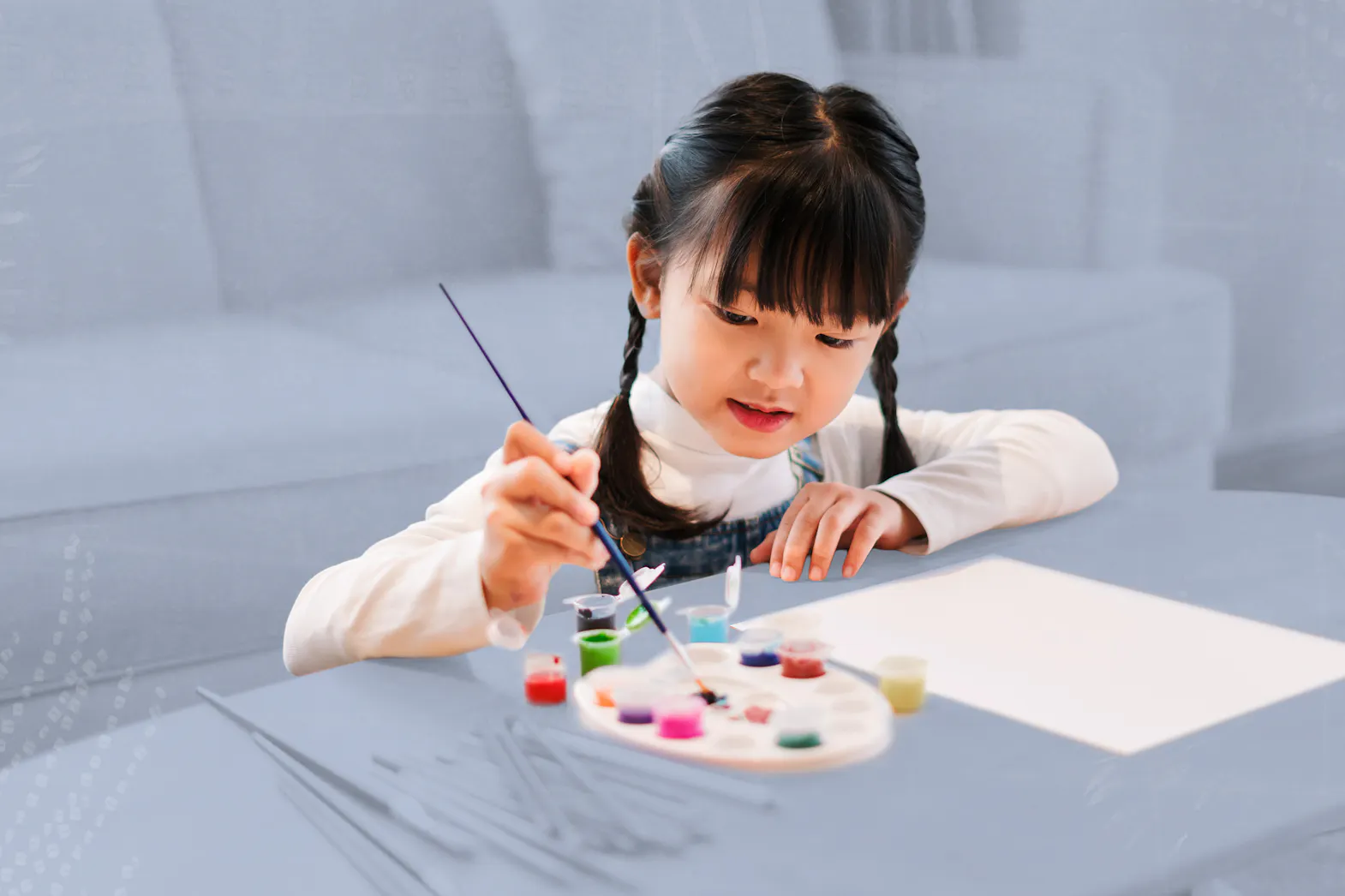
Having been born in Saudi Arabia, my childhood was split into two neat fragments.
Two months out of the year, we would travel to the Philippines to visit the rest of our family. The first few days of settling were always chaotic. Relatives came to the house in droves. Titas and Titos bore the gift of laughter, volume set to the max so you’d know the exact time of arrival. Stories were shared in excitement. Animated gestures sliced through the air, with comedic timing that a landline could never do justice.
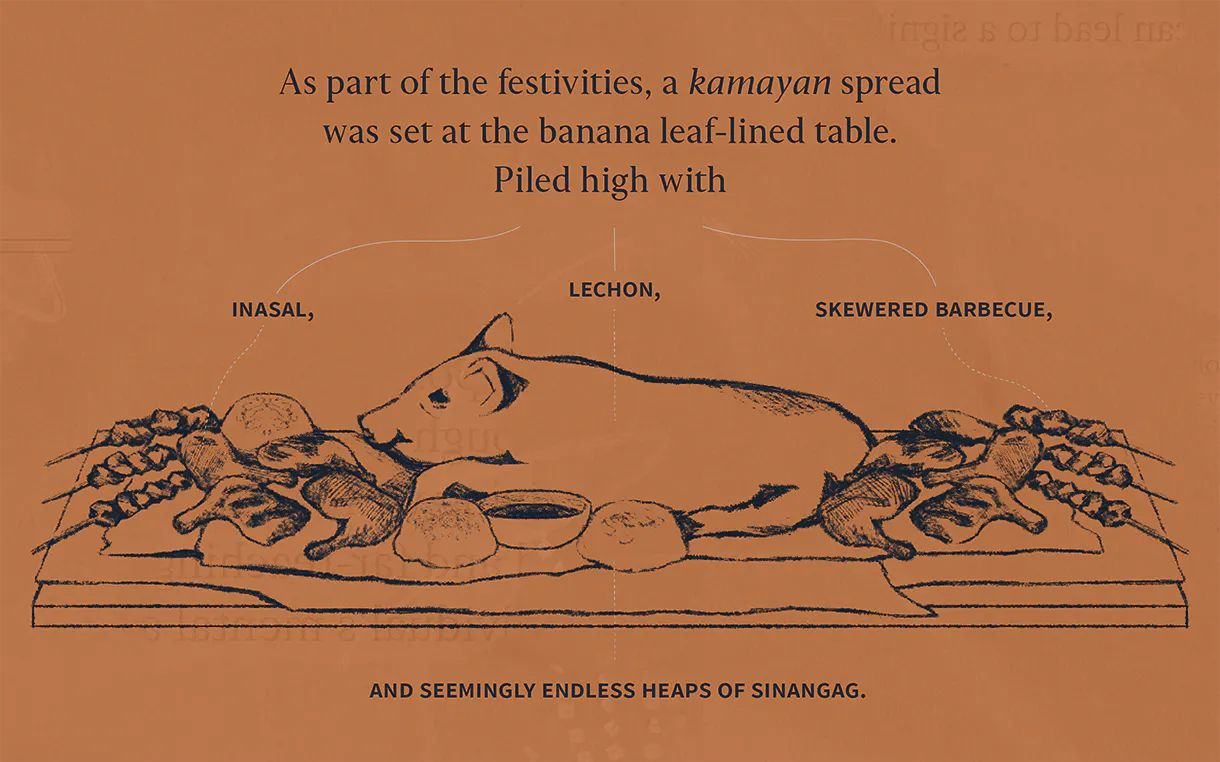
Image Text: As part of the festivities, a kamayan spread was set at the banana leaf-lined table. Piled high with lechon, inasal, skewered barbecue, and seemingly endless heaps of sinangag.
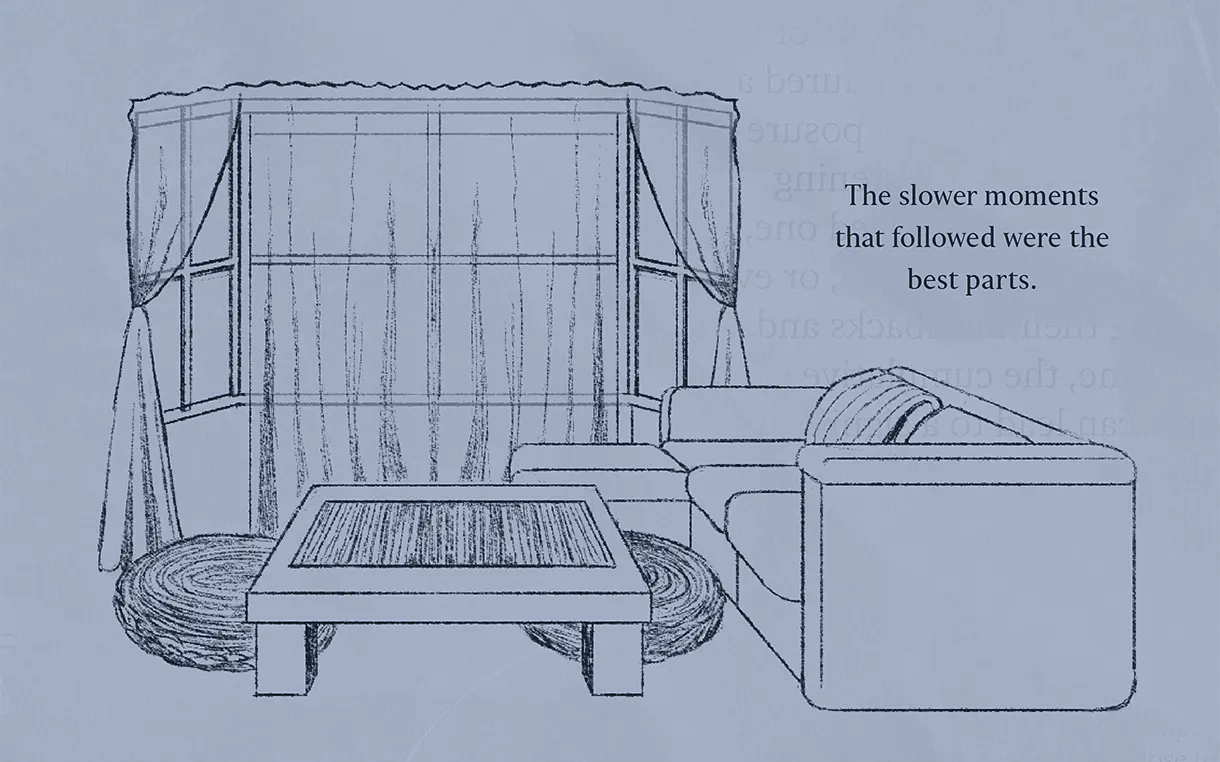
Image Text: The slower moments that followed were the best parts.
My siblings and I would unwind at the sala, sitting either on the sectional couch or the rattan poufs surrounding the table. Then, we would just draw for hours on end. Bathed in sun and the calm of creation.
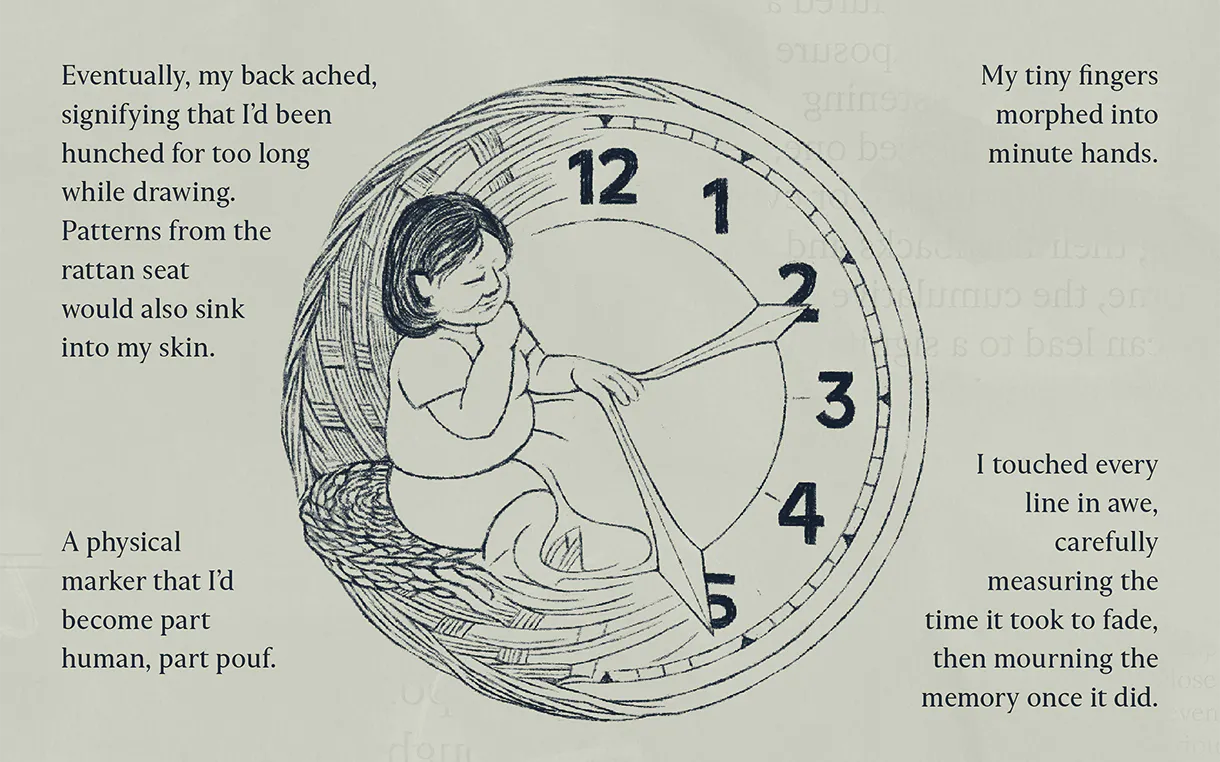
Image Text: Eventually, my back ached, signifying that I’d been hunched for too long while drawing. Patterns from the rattan seat would also sink into my skin. A physical marker that I’d become part human, part pouf. My tiny fingers morphed into minute hands. I touched every line in awe, carefully measuring the time it took to fade, then mourning the memory once it did.
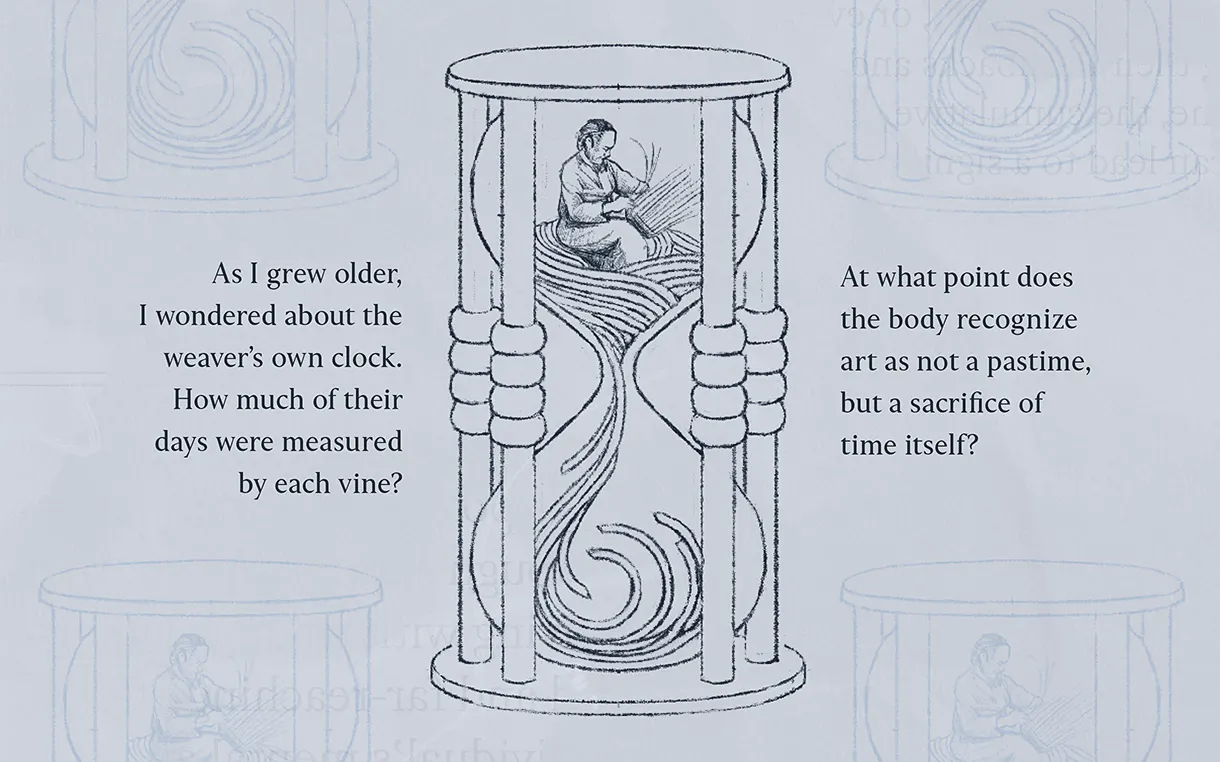
Image Text: As I grew older, I wondered about the weaver’s own clock. How much of their days were measured by each vine? At what point does the body recognize art as not a pastime, but a sacrifice of time itself?
Traditional weaving has been an integral art form in Filipino history.
From loom-woven textiles to handicraft works, preserved in each warp and weft are millennia worth of indigenous knowledge. Artisans, who are predominantly elderly women, are the carriers of these traditions. They teach everything from dyeing methods using local plants to the process of picking them from the earth.
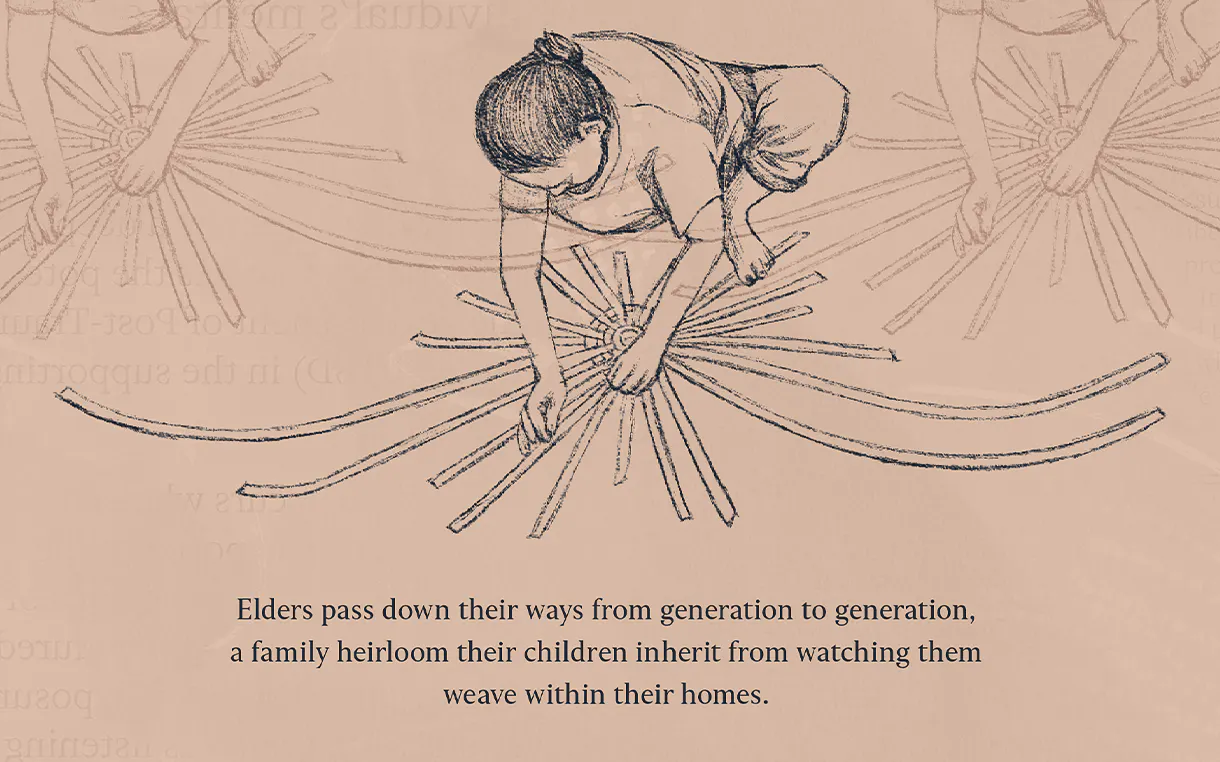
Image Text: Elders pass down their ways from generation to generation, a family heirloom their children inherit from watching them weave within their homes.
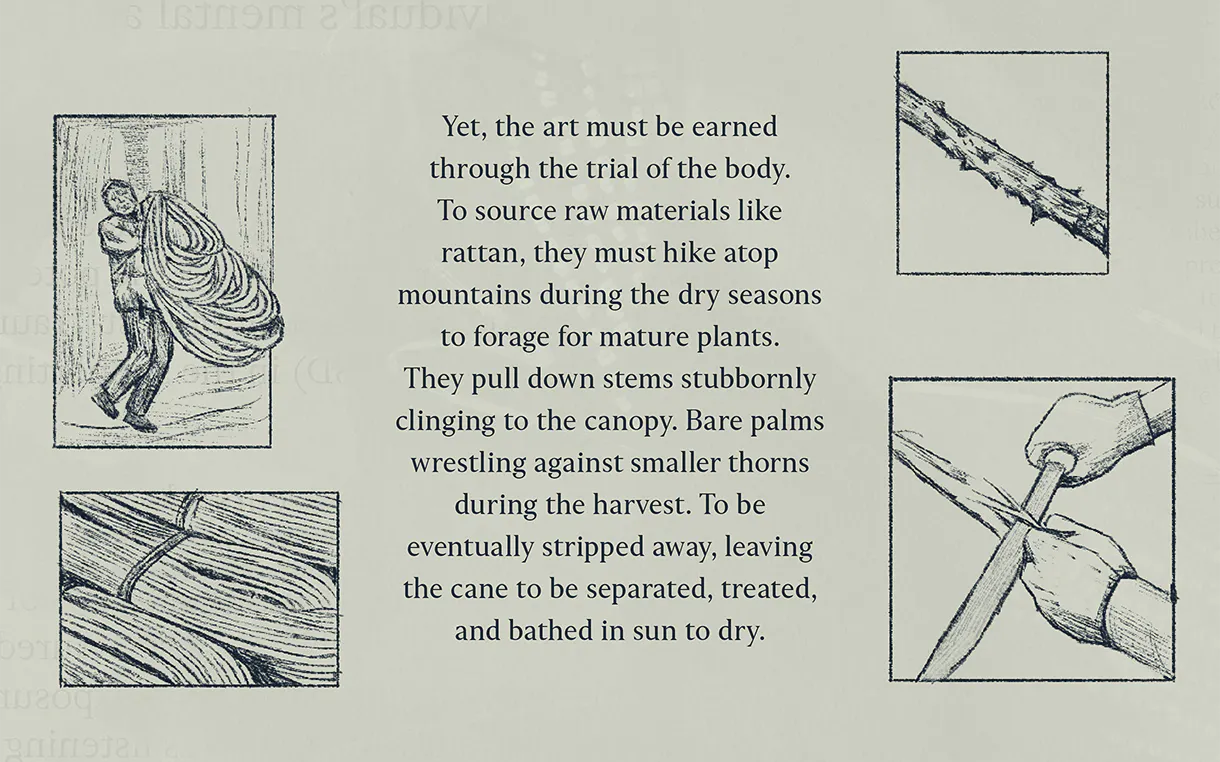
Image Text: Yet, the art must be earned through the trial of the body. To source raw materials like rattan, they must hike atop mountains during the dry seasons to forage for mature plants. They pull down stems stubbornly clinging to the canopy. Bare palms wrestling against smaller thorns during the harvest. To be eventually stripped away, leaving the cane to be separated, treated, and bathed in sun to dry.
From the mountain back to the home, through the push and pull of time, the labour transforms the body of the artisan.
An Elder will sit hunched in one spot for hours. Her hardened hands, the only visible movement. What remains unseen are the deliberate artistic decisions. Symbolic shapes and patterns are formed faster than fingers can allow. She’ll tap strips into shape using tack hammers and other smaller tools; an unforgiving choreography that curves her spine and strains her limbs. She continues to work even as time ages her body, even as her body weathers from the art.
For these Elders, weaving goes beyond a means of making a living. It is structure woven in their lives; a proud preservation of independence and cultural identity; a generational mark that stands the test of time.
As I grew further into my career, I’ve split the clock into neat fragments. My days were ruled by the mental ticking. As if the minute hands would tap me into the shape of a better designer or illustrator.
How fast can I draw this? Surely, this rough sketch shouldn’t have taken longer than fifteen minutes. How much time can I spare for conceptualizing? How many seconds for thinking?
I’ll stress over individual lines, each curve and corner. Yet, somewhere in the ether, a finished illustration is churned out through a single prompt—faster than my human hands or my mind could ever allow.
At what point did we sacrifice art to time? To what extent should we surrender our human capabilities to create, in place of faster output?
The clock may dictate the time, but it shouldn’t hold the worth of an artist. Art was never meant to be algorithmic. Art is storytelling. It exists to honour the human beneath, to leave their mark for other people to feel. To sterilize these stories into a generic picture, albeit ‘efficient’, is to do a disservice to people’s lived experiences.
Whenever it came time to leave my home in Saudi for our yearly Philippines trip, art remained my body’s constant companion during the transition. From there, time would cease to exist. My tiny fingers were just fingers, twitching for the moments when we’d finally settle, sit at the sala with my siblings, and create art. Now that I’m much older, I wonder about the younger artist within me. I think about their counting, their constant measuring of time, their grief of losing patterns.
I think about the weaver—the Elder I never had the honour to meet—and wonder if they knew they’d left a big mark on the fragment of a young artist’s life.