


Cities have traditionally been shaped around human needs, with infrastructure, mobility, buildings, and public spaces organized to support everyday activities. Within this “conventional” framework, nature is often relegated to decorative landscapes or isolated parks. Green spaces are treated as simple amenities for human use: parks offer recreation, trees offer shade, and green spaces enhance the appearance and aesthetics of a neighbourhood. Yet nature is more than something for people to look at or benefit from. As cities expand and ecological habitats become increasingly fragmented, it is worth reconsidering this relationship.
What if we began to see the city not as a place where nature is accommodated, but as an ecosystem in which nature is an essential part? Biophilic design offers a starting point for this shift. Milliken et al. (2023) describe biophilic design as a form of restorative environmental design that minimizes harm to natural systems while creating meaningful experiences of nature that enrich human health and well-being.
However, designing ecosystems calls for a broader perspective: one that considers not only what nature can do for us, but also what we can do to support the survival of other species. By bringing together green and grey infrastructure and grounding municipal governance in an ethic of care, biophilic design can support the transformation of a city from a human-exclusive space into a resilient, shared habitat.
Blending Green and Grey Infrastructure
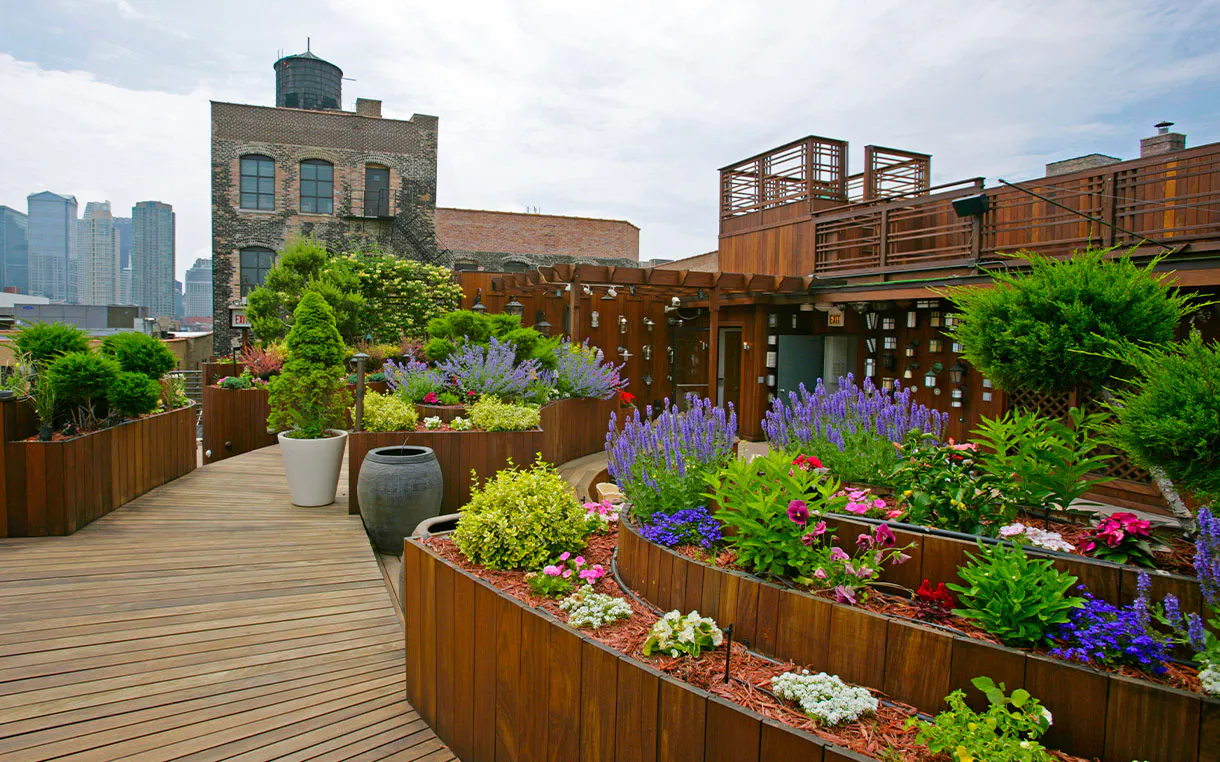
Roads, buildings, drainage networks, and utilities are often treated as the primary structure of a city, with vegetation added around them as a secondary layer. But these systems can work together, so that green infrastructure actively partners with grey infrastructure rather than being a decorative afterthought.
Green roofs, urban forests, vegetated drainage systems, and community gardens can manage stormwater, reduce runoff, regulate temperatures, and support biodiversity (Wang et al., 2024). More importantly, they can create localized microclimates that allow different forms of life to survive within the urban environment. A shaded understory, for example, offers very different conditions from an exposed lawn or paved plaza. Through canopy cover, layered vegetation, and moisture-retaining ground surfaces, urban spaces can provide shelter from heat and create small ecological refuges. Even vacant lots, leftover spaces beneath infrastructure, and underused rooftops can become opportunities to reconnect fragmented habitats.
However, realizing this potential will require updating land-use mandates, revising zoning by-laws, and building codes so that green-grey infrastructure shifts from optional aesthetic incentives into mandatory standards. The objective is not simply to add more greenery, but to make ecological processes part of how the city functions.
Designing with an Ethic of Care
There is a distinction between designing nature for human benefit and designing with an ethic of care, which means valuing and respecting the autonomy of more-than-human beings (Andreyev, 2017). Trees may cool our streets and wetlands may filter stormwater, but their value should not depend entirely on these functions. Beatley (2017) and Milliken et al. (2023) remind us that nature has an inherent moral worth, independent of its usefulness to people.
This changes the questions we ask as designers. Does a landscape provide habitat? Can species move between green spaces? Are we protecting existing ecological relationships, or disrupting them? Not every natural space needs to be programmed for human recreation; some spaces must remain undisturbed so other forms of life can flourish. At the same time, everyday encounters with urban nature can nurture curiosity, ecological awareness, and a sense of responsibility toward our surroundings.
Biophilic Urbanism and Habitat Connectivity
This thinking must extend beyond individual buildings and landscapes to the scale of the entire city. Milliken et al. (2023) frame biophilic urbanism through social, environmental, and transportation dimensions. These include connected public spaces, ecological corridors, mixed-use neighbourhoods, and pedestrian and cycling networks. These systems can bring nature into everyday movement while supporting habitat connectivity.
Yet, simply adding green space does not guarantee meaningful connections or equitable benefits. Access matters. So does the quality of these spaces and the opportunities they provide for both people and wildlife.
Measuring biophilic performance should therefore consider not only proximity to parks and the extent of semi-wild land, but also residents’ engagement with nature, ecological knowledge, and the institutional commitment to conservation and nature-based planning.
Conclusion
Ultimately, designing ecosystems requires a shift in how we understand our place within the urban environment. Biophilic design cannot simply be used as an aesthetic tool; it also requires updated planning and land-use policies. Green and grey infrastructure can work together, landscapes can support multiple species, and planning systems can make ecological considerations a priority rather than an afterthought. But these interventions must be grounded in something deeper than functionality: a willingness to recognize that the city is not ours alone. Urban nature is not an amenity to be accommodated within human-oriented spaces, but a shared habitat where human and more-than-human flourishing are deeply interconnected.